View Trend New Design Home Star-3,View Trend New Home Star-3,View Trend New Home Star-3,Trend New Home Star-3
Gallery
NEXT HOME
NEXT HOME
NEXT HOME
NEXT HOME
NEXT HOME
HOME-STAR3 DESIGN
Showing posts with label lace. Show all posts

Lace Design Work of Arpad Dekani

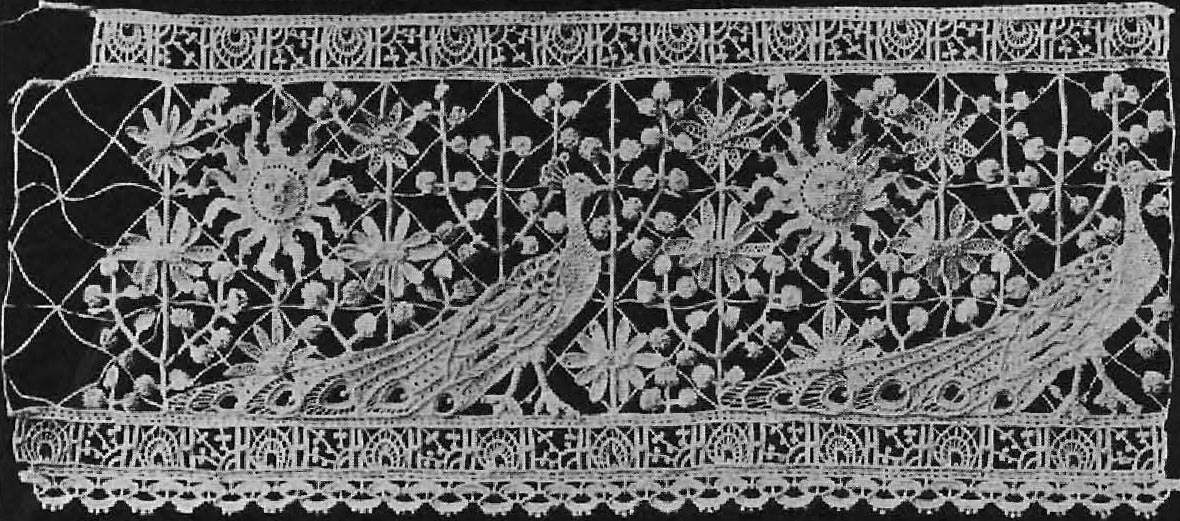
Illustration: Arpad Dekani Lace design c1908

Much of the early twentieth century revival of practical lace making, but more particularly that of designing lace within Hungary, can be attributed fairly squarely to Arpad Dekani. Professor Dekani, who started his career relatively humbly as a teacher at a provincial school in Hungary, eventually became a professor at the Arts and Crafts School in Budapest. It was in this position that he had the influence to restructure some of the aims and ambitions of lace production throughout Hungary.

Dekani used old traditional Hungarian patterns as an origin point in which to engender the production of a whole new system of styles for twentieth century lace production. He was also able to engineer the training of students on two levels. Firstly, there were those who would hopefully produce lace as a going concern. These students were trained in all forms of lace making as well as that of book keeping and the general maintenance and organization of a business. On another level Dekani organized the training of students which in turn who become teachers themselves. These newly trained teachers who were well versed in the new production and design parameters that Dekani had set out for the modernisation of Hungarian lace making, would filter out into the traditional areas of lace making in Hungary, particularly in the north of the country. These Dekani disciples if you will, were given the task of restructuring and repositioning local customs and traditional frameworks of lace production, not to industrialise the craft as such, but to give it a decent competitive edge within Europe.

Illustration: Arpad Dekani lace design c1908

A number of areas of traditional lace production in Europe particularly that of Italy and Austria, had already gone through a restructuring process, giving exports a much more contemporary look and feel to their lace design work. Although still based very much as a traditional craft, European lace did see a considerably robust marketing campaign in the late nineteenth century, but particularly that of the early years of the twentieth century, when so many other crafts and traditions were also having to reshape and redesign themselves for the new century.

Hungary as a partner within the Austro-Hungarian Empire, tended to follow the structure already set out by the Austrian craft schools and college system, whereby traditional craft design and decoration was upgraded, restyled, repackaged even. However, Austria was not the only example of this repositioning of design and craft for the new century. Schools and colleges from Glasgow to Moscow were having to re-evaluate the textile craft system, its present position and its potential future in a rapidly expanding market that was becoming increasingly dominated by mass production and consumerism. Hand production of printed and woven textiles, as well as that of embroidery and lace was particularly vulnerable to market forces. The situation was not helped by the increasing reluctance of customers to subsidise these traditional crafts by paying much more for hand crafted work than they would for industrially based work.

Illustration: Arpad Dekani lace design c1908

In some respects the blame for the decline of the craft system of hand production can be placed with the general buying public as much as with industry. Many who could afford to subsidise these old traditions did so on a progressively smaller scale. As fashion began to incorporate the marketing ploy of inbuilt obsolescence, there was even less room for the craft system to manouvere, particularly with a product that was often produced with the intention that it be seen as outside the role of obsolescence and therefore fashion. Even though some craft work might have attempted to compete with fashion, by its very nature and its high price tag, craft products were meant to be bought as long term investments rather than for short term profit.

This by no means implies that Dekani and many others like him across Europe failed in their attempt to redesign and in many cases relaunch craft traditions. There is a long line of repeated craft initiatives that stretch across the twentieth century. Many of these might well have been short term or failed for various marketing, pricing and fashion reasons. However, the craft system is still with us today and as it yet again restructures itself in the form of contemporary craft, we should be thankful for the many individuals, such as Arpad Dekani who kept the ideal of production that was largely outside the increasingly fragile and some might even say destructive cycle of fashion and redundancy.

Illustration: Arpad Dekani lace design c1908


Reference links:
By Hand: The Use of Craft in Contemporary Art
Contemporary Crafts
Form Magazine - Australia
Crafts: Contemporary Design and Technique
Arts and Crafts Furniture: From Classic to Contemporary
Contemporary African Arts and Crafts: On-Site Working with Art Forms and Processes [460 Photographs; 23 Color Plates]
Common Ground: Contemporary Craft, Architecture and the Decorative Arts (Mercury Series)
Craft and Contemporary Theory
Craft and contemporary culture,
In Praise of Hands: Contemporary Crafts of the World
Exploring Contemporary Craft: History, Theory and Critical Writing
Jim Partridge (Contemporary Craft Series) (Contemporary Craft Series)

Student Lace Design Work

Illustration: Agnes C Martin Lace border design 1896

Student work of any era can give a good indication as to the healthiness, or not, of contemporary design and the decorative arts. Although much student portfolio work becomes lost and discarded over the generations, we are lucky to have some examples saved through a system of competitions that were particularly popular during the last couple of decades of the nineteenth century and the first couple of the twentieth.

Competitions became regular features in a number of monthly art, design and decoration magazines, with two influential titles standing out in particular. The German Deutsche Kunst und Dekoration published between 1897 and 1932 was by far the best magazine available in which to chart the development of the decorative art, design and craft over that period. This was closely followed by The Studio magazine published between 1893 and 1964. It is an 1896 issue of this British magazine from which the illustrations for this article are taken.

Illustration: George Marples Lace border design 1896

The regular competitions proved particularly popular with students and colleges alike as it gave both an identity and public awareness through the readership of the magazine. It also appealed to magazine editors as it appeared as if the magazine itself was both supporting and directly interacting with colleges, students and through them the future of design art, design and decoration.

Although the entries were obviously highly vetted and edited by the magazine itself, and there were sometimes references to the poor standard of entry, on the whole the exercise proved to be both successful and informative as to the styles and design techniques that were presumed popular with students at a national level.

Illustration: L Tyler Lace border design 1896

Admittedly, not all of the entries were through educational establishments, as competition entries could be as diverse as the readership of the magazine. However, many were assocoited with specific colleges and art schools. Also interesting is the number of female entries which was encouragingly high for a period which still saw some reluctance in female educaztion, at least at college level.

Competitions took on most of the obvious interior design and decoration disciplines such as furnishing fabrics, wallpapers, stained glass, metal work, book binding and furniture. However, two of the most popular disciplines proved to be embroidery, followed to a lesser degree by lace. A fair proportion of the competition embroidery work tended to be more formulaic and somewhat unadventurous in nature, while lace was interestingly less so.

Illustration: Mary L Goodacre Lace border design 1896

Lace design with its structured history of specific regional styles, is often seen as a craft and design discipline that has limits to its use as a contemporary medium. With a general impression that the craft has little room for innovation, experimentation and general manouvrability, it is often dismissed as a craft of tradition rather than one that can face modern tampering. However, the student design work shown in this article, along with many other competition works found within The Studio, Deutsche Kunst und Dekoration and other periodicals over a time period of forty years or more, shows that much can and was conceived as being achievable within the lace craft.

It is true that not all, and perhaps very few of these design winners had their work put into production. However, they are fascinating examples of styles of decorative pattern work, many of them with a particularly contemporary feel to them. Student work is often unaffected by the constraints of financial budgeting, and although this could be said to be an unrealistic view on the students part of the true parameters of the market place, it is also true to say that the student was also not constrained by the general reluctance of both manufacturers and the retail trade into innovative aspects of design and decoration that could not guarantee a predictable profit.

Illustration: W Tyndale Lace border design 1896

While these competitions may not have necessarily raised the level of contemporary standards, they did give an indication as to what was going on inside the schools and colleges of the various nations of Europe and North America during the vital design period of the turn of the twentieth century, and the direction that those students would take when professional designers themselves.

Reference links:

Macrame Decorative Work

Illustration: Nineteenth century macrame border fringe design

Macrame is a form of knot work that although not strictly considered to be lace itself, is related to that discipline and was sometimes in the past known as macrame lace.

The name macrame originally comes from the Arabic migrameh which is said to denote ornamental fringe. It was used effectively in the Islamic world and is said to have originated from weavers in the thirteenth century, who got into the habit of tidying up the stray warp and weft threads of woven fabrics by tying knots that soon became more ornamental than practical in fashion. Eventually the technique progressed to such an extent that it became separated from the weaving entirely so as to become an independent craft in its own right. This form of hand knotted fringe and trimming work proved to be particularly effective and popular.

Illustration: Nineteenth century macrame border fringe with picots design

It is thought that macrame entered Europe via Islamic Spain and it is this country that the rest of Europe tended to identify with the early stages and origins of the craft. In Europe itself, macrame was often used as a decorative finish for ecclesiastical vestments and interior fabrics. However, it was also used domestically for both interiors and costume.

The process of macrame is produced by using the fingers to tightly tie short ends of thread, either horizontally or vertically. By interweaving these knots a range of decorative pattern work can be achieved. Usually because of its nature, geometrical type pattern work is best suited as any other type or style is very difficult to achieve because of the nature of the knotting process. However, macrame is incredibly durable and versatile. Because of the variation in thickness of thread used, from near rope to silk thread, the effect can extremely wide ranging. In this respect macrame has been used for fringe and border work throughout the whole spectrum of textiles, with heavier work being produced for interior accessories, while much finer work tended to be used in fashion.

Illustration: Nineteenth century macrame border fringe with pointed scallops & large tassels design

The Victorians were particularly taken by the craft of macrame and many specific books and guides were published throughout the era in order to both teach the fundamentals and also the more complex skills associated with the craft. As the Victorians were keen on all forms of embellishment, including trimming and fringing, the craft was obviously well suited to the era and many homes would have seemed bereft without some form of macrame craft work.

In the 1970s with a full blown craft revival in all its forms, macrame made a temporary but wide-ranging come back. A number of bright and breezy books and guides were published, many of them trying to reflect the seeming diversity and variety of macrame. However, the amateur craft tradition of this particular era did not last into the 1980s and today macrame, though still practised by some, is not considered a particularly popular textile craft. However, with yet another amateur textile craft revival taking place, macrame could well see yet another revival.

Illustration: Nineteenth century macrame border fringe design

For anyone interested in this particular and fairly unique craft, a couple of links are shown below in the Reference links section. These links are to sites giving short tutorials, information, videos and free patterns, and deal with the basics of the macrame craft. There are also a number of helpful tutorial videos that can be found on You Tube. I have therefore also added a You Tube link on the specific subject of macrame and tutorials, which is also listed below, along with a selection of macrame books which are all available on Amazon.

Illustration: Nineteenth century macrame border fringe design


Reference links:
How to macrame site
Free macrame patterns site
You Tube macrame videos
The dictionary of needlework;: An encyclopaedia of artistic, plain, and fancy needlework
The Macrame Book
Magnificent macrame
The New Macrame: Contemporary Knotted Jewelry and Accessories
Macrame: The Art of Creative Knotting
Step-By-Step Macrame: A Complete Introduction to the Craft of Creative Knotting
Decorative Knot Craft: Over 20 Innovative Knotting And Macrame Accessories
Art of Macrame
Macrame: Creative Knot-Tying

The Aemilia Ars Society

Illustration: Aemilia Ars Society needlepoint lace

Lace making in Europe saw a great, if temporary renewal in its fortunes during the latter half of the nineteenth century. Various organizations and schools were set up across the continent and had varying degrees and rates of success. Many were linked to either government or aristocracy, or both. Much was done to restructure an old but often tired, derivative and unprofitable textile craft.

One of these organizations was the Aemilia Ars Society founded in Bologna in 1898. The society was founded with the help and support of such contemporary Italian creative individuals as Alfonso Rubbiani and Achille Casanova, in order to promote a new and vigorous craft tradition in the Emilia region of Italy. To some extent it drew inspiration from the English Arts & Crafts model, though was entirely Italian in its makeup and cultural inspiration. Although the society itself was by no means limited to the revival of lace production in the region, it was in fact interested in revivals of metal, wood, embroidery and other crafts; it was the work with lace that is best remembered today.

Illustration: Aemilia Ars Society lace design

Although much of the initial lace produced by the Society was based on past greatness, designs were taken from an old volume of lace designs owned by the Marchesi Nerio Malvezzi, this did not mean that new work was not attempted. Although lace work produced by Aemilia Ars was perhaps not as contemporary looking as that being designed further north in schools across the Austro Hungarian Empire, the lace produced in Bologna and eventually all over Italy was seen as being of a particularly high standard with a pedigree based on the history of Italian lace.

Illustration: Aemilia Ars Society drawn linen and lace design

One of the main instigators for the renewed popularity of lace in Italy was the now famous international Milan Exhibition of 1906. At this venue native lace making was given a particularly high profile. A whole room was dedicated to lace work from across Italy. It was exhibited very effectively against a pure white background with more than adequate and sensitive lighting. It was this exhibition space that helped to internationalise the new vibrancy and direction that had been found for one of the older traditions of Italian textile craft.

The problem, as always with such labour intensive crafts, was the lack of enthusiasm provided by any potential lace workers. There was little to inspire women to take up the craft as it had always been and still remained a tiring, time consuming and poorly paid occupation which often led to recurring health problems, particularly those involving eyesight.. There were new and easier options for young women in late nineteenth and early twentieth century Italy, to make far easier money. On top of that was the changing emphasis on fashion which saw a reduction of layers and decoration and a move to produce a more minimal, trimmer and practical figure for women, devoid of lace.

Illustration: Aemilia Ars Society lace coverlet

Although lace making has never truly died as a craft, it often appears as a less attractive textile craft option than perhaps it really is or should be. Although there are no real signs of a large scale revival in the fortunes of lace, it cannot be surmised that there never will be again.

Anyone interested in Italian lace in particular, might like to try the link to the Italian Needlework blog that can be found below in the Reference links section, along with a variety of books on Italian lace that can be easily be found on Amazon.

Illustration: Aemilia Ars Society short curtain in needlepoint lace

Reference links:
Italian Needlework blog
Identification of Lace (Shire Library)
Italian Lace Designs: 243 Classic Examples (Dover Pictorial Archive Series)
Carmela Testa Variety #1- Italian Cutwork & Filet Lace c.1921
Old Italian Lace - Vol. I.
Old Italian Lace - Vol. II.
Italian Laces and Embroideries